Avatr 07L: Chinese premium SUV moves closer to export markets
With the 07L, Avatr is preparing to enter a right-hand-drive market. The electric premium SUV will launch first in Australia and could later also become interesting for Europe.
Avatr 07L: Export debut with signaling effect
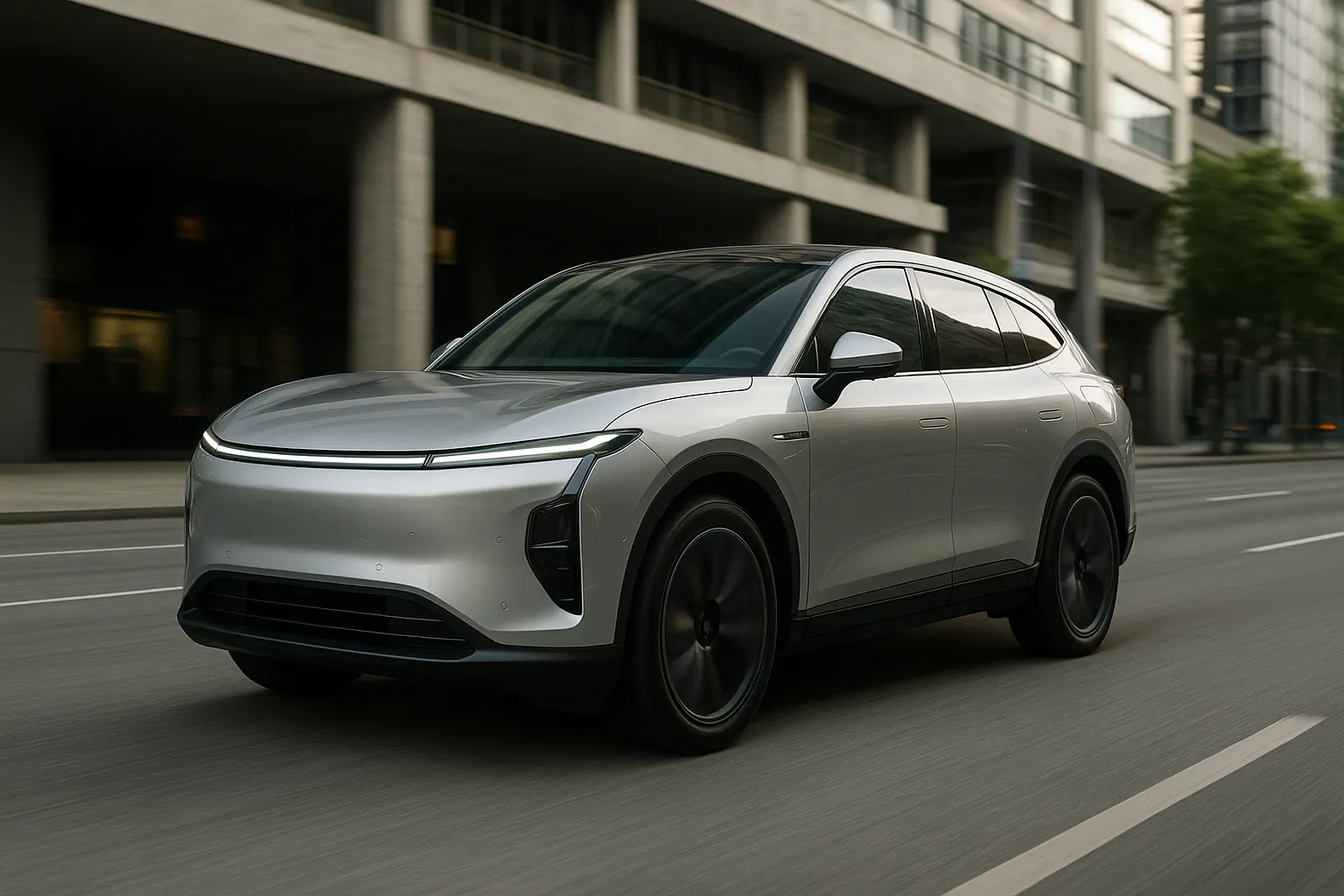
With the 07L, Avatr is preparing an important step beyond its Chinese home market. The approximately 4.90-meter-long premium SUV is initially set to come to Australia as a right-hand-drive model, with first deliveries expected in mid-2027. This means the brand is entering for the first time a market where driving is on the left side of the road and vehicles therefore have to be offered with the steering wheel on the right.
That may sound like a technical detail, but it is crucial for global expansion. Anyone who develops, homologates and produces a car as a right-hand-drive model opens up not only Australia, but in principle also countries such as the United Kingdom, New Zealand, Japan, South Africa or parts of Southeast Asia. Whether and when Avatr will actually serve more of these markets has not yet been confirmed. For Europe, one point is particularly interesting: the brand had previously indicated ambitions for the United Kingdom, but an originally suggested timeframe around 2025 did not become reality.
What is Avatr?

Avatr is a Chinese premium electric brand backed by several heavyweights of the country’s industry. Automaker Changan contributes vehicle development and production, Huawei provides digital technology and connectivity, while CATL, one of the world’s largest battery manufacturers, stands for battery expertise. Such partnerships have now become common in China: automakers, tech groups and battery producers pool resources to bring new vehicles to market faster.
For buyers outside China, this structure is important because it shows that Avatr is not appearing as a small start-up without an industrial base. At the same time, a strong technology promise does not automatically mean that service, spare parts supply, software maintenance and residual values in new markets will immediately be at the level of established manufacturers. This is exactly what new export brands will be measured against.
Size and positioning of the 07L

At around 4.90 meters in length, the Avatr 07L sits in a strongly growing segment of large electric premium SUVs. It is therefore larger than many traditional midsize SUVs and moves close to models such as the Audi Q6 e-tron, Mercedes GLC Electric, Polestar 3 or Volvo EX60. BMW’s electric SUV model ranges are also part of the relevant competitive environment, depending on the market and model generation.
Visually, Avatr relies on a very smooth, futuristic design language. The brand wants to position itself less through rugged SUV elements than through aerodynamic surfaces, modern lighting graphics and a strongly technology-oriented cabin. The brand’s design was also shaped by designers with a European background, which is reflected in the proportions and the comparatively restrained linework.
Electric drive, 800 volts and open data
An 800-volt architecture is planned for international variants of the 07L. This technology can enable shorter charging times, provided the battery, charging electronics and infrastructure work together. In practice, the advantage does not depend solely on the onboard voltage: charging power, battery temperature management, the charging curve and the availability of fast DC chargers are also decisive.
Specific battery sizes, performance figures and ranges for export models have not yet been finally named. In China, ranges of up to around 450 miles are cited for related versions. However, these values should be interpreted cautiously, as Chinese figures are often based on local test cycles and are not directly comparable with WLTP values in Europe or real-world highway ranges. For prospective buyers outside China, only the homologated data for the respective market will be meaningful.
In its model range, Avatr offers both purely battery-electric vehicles and variants with range extenders. Whether the 07L will be offered in all export markets exclusively as a BEV or additionally with range-extender technology has not been conclusively clarified at this stage. This decision would be relevant from a market strategy perspective: pure electric SUVs fit well in countries with dense charging infrastructure, while range-extender models can be more attractive for some buyers in regions with long distances and a thinner fast-charging network.
Why Australia first makes sense
In recent years, Australia has become an important test and growth market for Chinese manufacturers. The market is right-hand drive, relatively open to new brands and has an affluent SUV customer base. There is also growing demand there for electrified vehicles, even though charging infrastructure and political conditions vary by state.
For Avatr, Australia can be a kind of export laboratory. The brand must not only sell vehicles there, but also build dealer or direct-sales structures, warranty handling, software support and spare parts chains. If it succeeds, credibility for further international launches will increase. If it fails due to service quality or price positioning, that would slow the expansion.
Significance for European buyers
For customers in Germany, the 07L is not initially a car that can be bought directly. Nevertheless, the model is relevant because it shows how quickly Chinese premium providers are entering segments that have so far been dominated by European brands. Large electric SUVs with high charging performance, a digital interior and striking design are precisely the vehicles with which Audi, BMW, Mercedes, Volvo and Polestar want to achieve high margins.
More competition can bring advantages for buyers: better standard equipment, faster technology cycles and price pressure. At the same time, interested customers should pay particular attention with new brands to warranties, workshop networks, software updates, data protection, towing capacity, winter suitability and realistic ranges. An impressive data sheet is no substitute for robust everyday experience in the respective market.
Another sign of China’s premium offensive
The Avatr 07L represents a new phase of Chinese car exports. It is no longer just about inexpensive small cars or simple electric cars, but about highly equipped premium vehicles with distinctive design and close integration of battery, software and vehicle development. This strategy hits established manufacturers in an important profit segment.
Many questions remain open: final technical data, prices, equipment, warranty conditions and possible market launches in Europe. What is already clear, however, is that the move to right-hand drive is more than a regional adaptation. It makes Avatr more internationally compatible and increases the pressure on established providers to convince in electric SUVs not only with brand image, but also with technology, software and value for money.