Mercedes-Benz and Wayve bring AI driver assistance to production cars
Mercedes-Benz has signed a production agreement with Wayve. The AI software is intended to shape future driver assistance systems, but models, markets and launch date remain open.

Mercedes-Benz is taking the next step in software-based driver assistance: The manufacturer has signed a production agreement with the British AI company Wayve. The aim is to integrate Wayve’s “AI Driver” into future production vehicles. This brings closer a form of driver assistance that relies more heavily on learning systems than on conventionally programmed individual functions.
Specific model series, markets and a binding launch date have not yet been named. A time frame of around two years is being discussed as a target corridor, but the introduction has not yet been officially spelled out. For buyers, precisely this limitation is important: The agreement shows a clear technical direction, but it does not yet replace a product announcement for a specific E-Class, S-Class, an EQE or another model.
What Mercedes and Wayve are planning
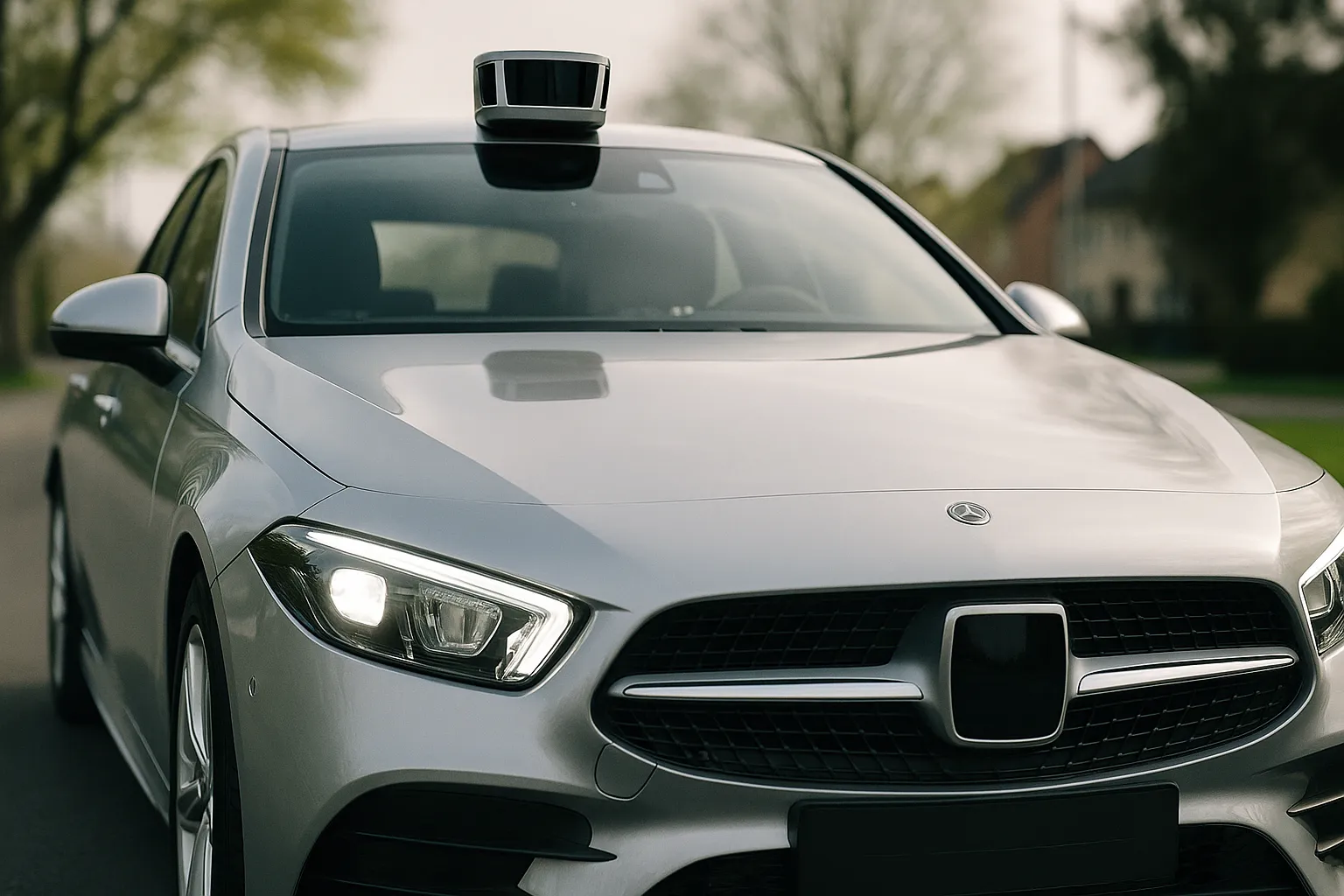
Wayve develops AI systems for automated driving that are intended to interpret traffic situations using large amounts of data and derive driving decisions from them. The approach differs from many older assistance systems, which rely heavily on fixed rules and detailed maps. Modern AI models can learn how vehicles, pedestrians, cyclists, road markings and other road users interact in very different situations.
For Mercedes-Benz, this makes strategic sense. In recent years, the manufacturer has already positioned itself with highly developed assistance systems, including Drive Pilot, a Level 3 system for certain motorway situations in selected markets. Level 3 means that the vehicle can take over parts of the driving task under clearly limited conditions, while the human must take over again when prompted. However, the new collaboration with Wayve does not automatically mean an expansion of Level 3 to all models or countries.
It is more likely at first that Mercedes will integrate AI functions into future assistance packages in order to improve perception, lane guidance, distance keeping, responses to complex traffic situations and, in the long term, the comfort of automated driving functions. Whether this technology will be offered as Level 2 assistance, a Level 3 system or in several expansion stages remains open.
Why the AI approach is important
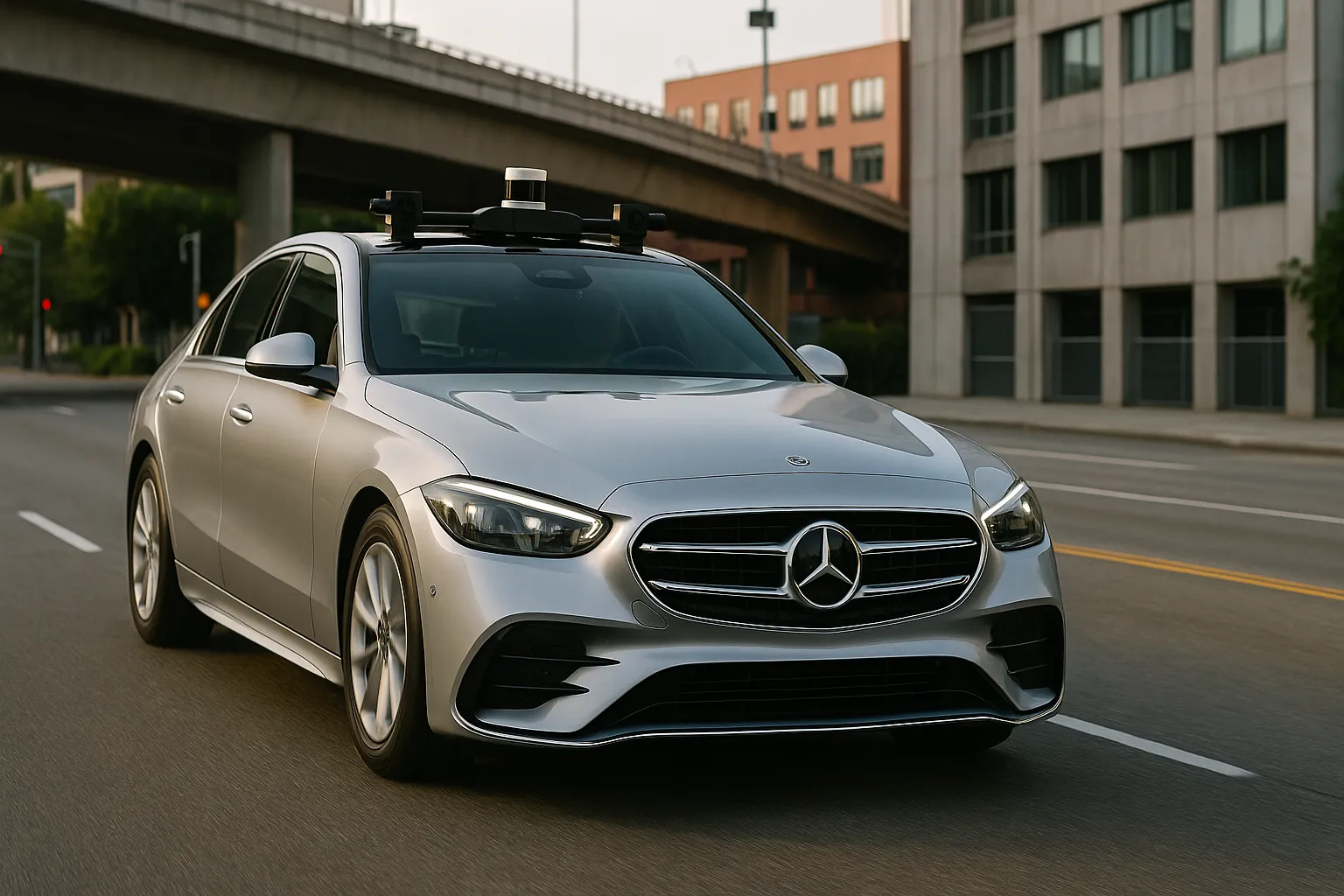
Driver assistance has long since ceased to be purely a comfort issue. Adaptive cruise control, lane centering, emergency braking assistants and traffic jam assistants are part of the expected profile in many vehicle classes. At the same time, conventional systems repeatedly reach their limits in everyday use: faded road markings, construction sites, ambiguous right-of-way situations, unusually parked vehicles or complex urban traffic can unsettle assistance systems.
An AI-based approach promises to assess such situations more flexibly. Instead of programming every exception individually, developers train models with large quantities of real and simulated driving scenarios. This can help a system not only recognize what is happening directly in front of the vehicle, but also better assess likely developments: Will a pedestrian step into the road? Is a vehicle pulling out? Is a lane marking temporarily invalid because of roadworks?
The benefit for drivers would be particularly noticeable if assistance systems acted more calmly, more predictively and less abruptly. Many current systems already work well in standard situations, but seem nervous in edge cases or suddenly disengage. A better-trained AI could make the difference between a system that the driver uses only occasionally and one they regularly trust in everyday driving.
No shortcut to full autonomy
Nevertheless, caution is warranted when it comes to expectations. A production agreement does not mean that fully autonomous Mercedes models are imminent. Between a powerful AI demonstration and a series-ready vehicle system lie validation, safeguarding, approval, liability issues, data management and integration into vehicle architectures.
The hurdle is particularly high for premium manufacturers. A system must not only function under ideal conditions, but also remain demonstrably safe when sensors are dirty, the road is poorly marked or other road users act unpredictably. In addition, legal requirements vary greatly by country. An assistance system that is approved in one market may be restricted or not available at all in another market.
For owners, this means: Even if Mercedes brings the technology to new vehicles, there is no guarantee that older models will receive the same range of functions via software update. That depends on cameras, computing power, sensors, E/E architecture and regulatory approvals. Future vehicles with a more strongly software-defined platform are likely to have an advantage here.
A signal to the industry
The cooperation shows how strongly competition in the automotive sector is shifting. In the past, engines, transmissions, chassis and body structures determined technical leadership. Today, computing power, training data, AI models, cloud connectivity and update capability are also involved. Manufacturers have to choose which software they develop themselves and where they involve specialists.
Mercedes-Benz is pursuing a middle path: The brand remains responsible for the overall system, the driving experience and safety assurance, but relies on a specialized partner for certain AI components. For the industry, this is an indication that driver assistance could be developed more modularly in the future. Automakers provide the vehicle, sensors, safety logic and brand integration; AI companies provide learning driving models and development tools.
This is also relevant for enthusiasts. The question of how a car “feels” is increasingly shaped by software. Well-tuned AI assistance can make a long-distance vehicle more relaxed without completely removing the driver from the experience. At the same time, the discussion is growing about how transparent such systems must be and how much control drivers should retain.
What buyers should consider now
Anyone buying or leasing a Mercedes in the coming months should not view the new agreement as an immediate buying argument for a specific model. What remains decisive are the currently orderable assistance packages, their range of functions in the respective country and the vehicle’s hardware. Prospective buyers should carefully check which functions are active at the time of delivery and which are only announced as a later option.
For customers who want to keep a vehicle for longer, update capability is becoming more important. A powerful vehicle architecture, clear information on software services, terms, costs and possible restrictions are important. Especially with assistance systems, one should not rely solely on future promises, but on functions that are verifiably available and approved.
The agreement between Mercedes-Benz and Wayve is nevertheless an important milestone. It shows that AI-based driver assistance is moving more strongly from the experimental phase toward series production. For buyers, this could mean safer, more comfortable and more naturally operating assistance systems in the medium term. For the industry, it is another sign that the next major leap in vehicle development is taking place not only under the hood, but above all in the code.