Stellantis in Canada: Ex-Dodge plant faces drastic production limits
Contract talks between Stellantis and the Canadian union Unifor are stuck. For a former Dodge plant, a possible production limit of only three vehicles per day is on the table.
A Canadian Stellantis plant is at the center of a growing labor dispute
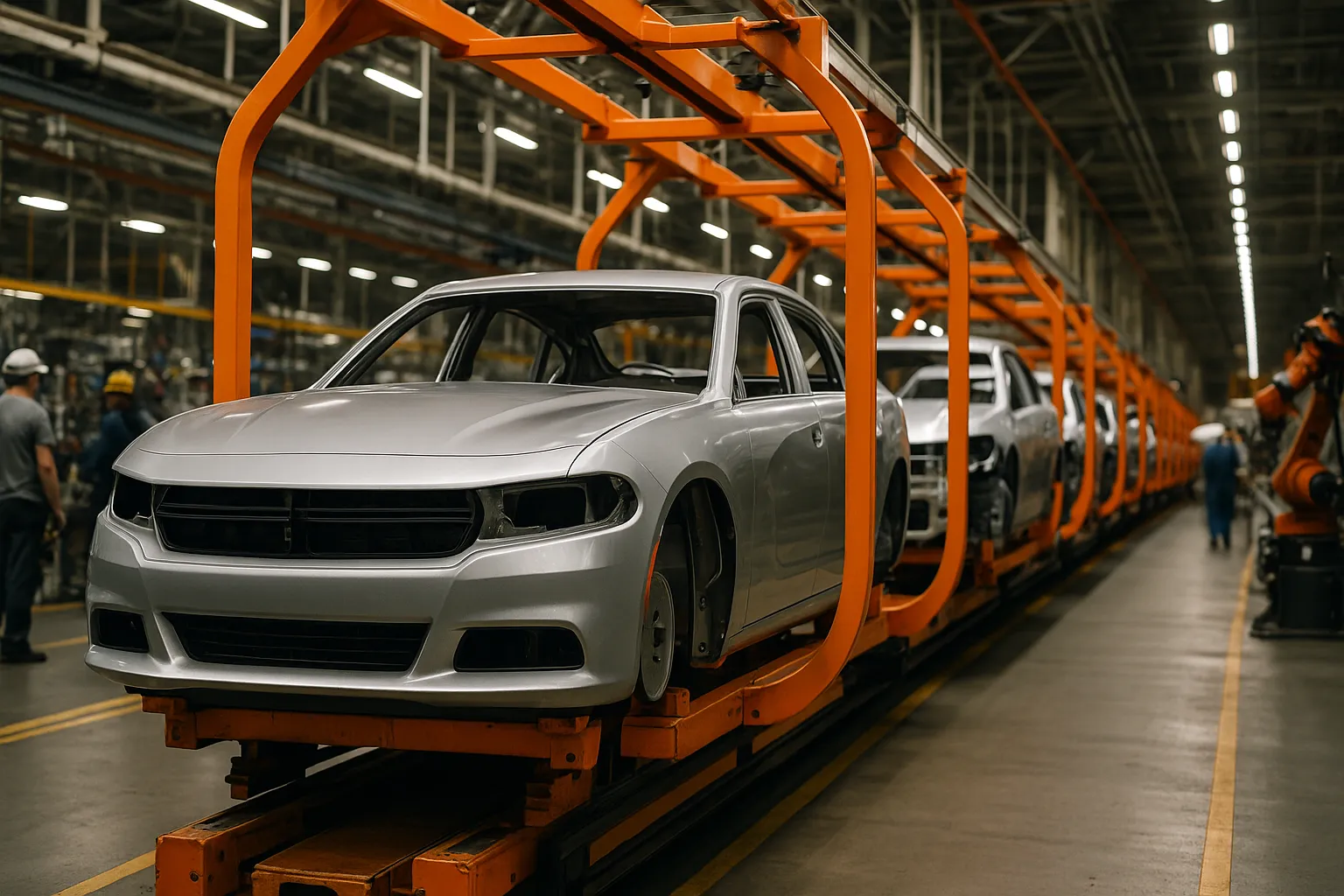
At Stellantis in Canada, a contract dispute is escalating that could have significant consequences for a former Dodge plant. The Canadian union Unifor, which represents more than 9,000 Stellantis employees in the country, now sees a strike as a real possibility. The background is stalled talks over working conditions, job security, and the future of individual sites.
Particularly explosive is a scenario under which a plant that in earlier years was able to build up to around 1,000 vehicles per day could temporarily be limited to only three vehicles daily. Whether this figure already counts as a binding production plan or must be understood as a pressure tactic in the negotiations is currently not conclusively clear. What is clear, however: Such a cut would be extraordinary for a high-volume automotive site and would go far beyond a normal slowdown.
For Stellantis, this is not just about a single site. Canada has traditionally been an important production area for the group, especially for North American models. For the union, the issue is whether the plants will have a reliable future even in a phase of model changeovers, electrification, and uncertain demand.
From volume production to minimal operation
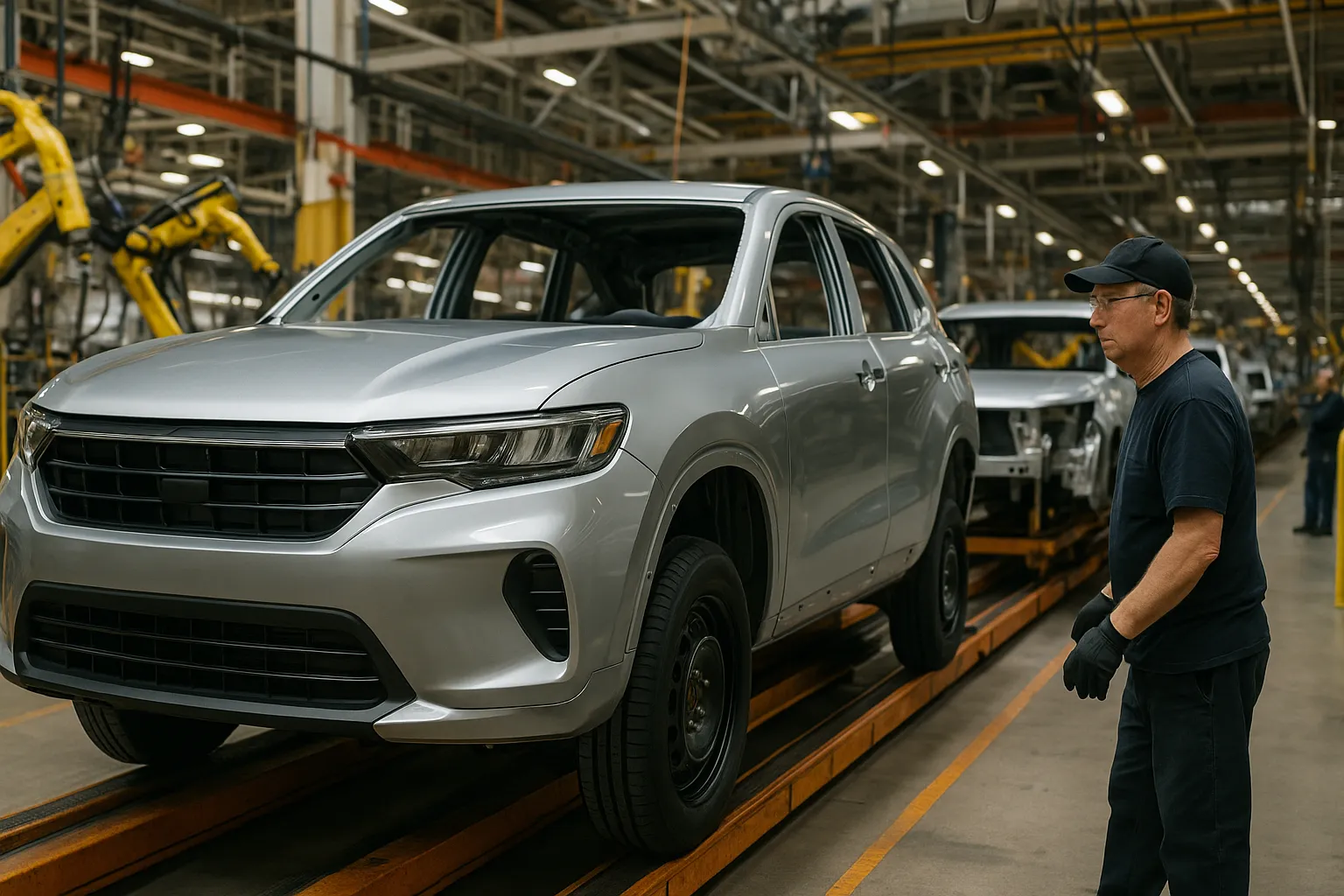
A plant that once produced up to 1,000 vehicles per day is designed for cycle times, supplier logistics, and high utilization. Body shop, paint shop, final assembly, quality assurance, and parts supply only function economically in such a system when larger quantities regularly move through the line. Three vehicles per day would hardly be classic series production in this context. Rather, it would be a minimal operation, for example for technical testing, to maintain certain processes, or to prepare for a future production ramp-up.
That is precisely where the labor and industrial-policy explosive force lies. Employees and suppliers need planning certainty. If a plant is operated only on the smallest scale, questions arise about shifts, wages, training, supply contracts, and the long-term role of the site. Even if such a limit were only temporary, it could cost trust – among employees as well as among local businesses that depend on the plant.
For car buyers, the situation is not automatically equivalent to empty dealer lots at first. It has not yet been publicly specified which models, trims, or production periods would be directly affected. Nevertheless, the conflict shows how quickly negotiations in the background can affect delivery times, model availability, and price stability when a major plant falls out of step.
Why unions are applying pressure during the transformation

The auto industry in North America has been under dual pressure for years. On the one hand, manufacturers demand more flexibility because combustion-engine vehicles, hybrids, and electric cars have to be planned and built in parallel. On the other hand, unions want to prevent the switch to new powertrains from leading to fewer jobs, more temporary work, or insecure employment models.
For Unifor, Stellantis is one of the most important employers in the Canadian automotive sector. More than 9,000 employees mean not only factory jobs, but also purchasing power in communities, tax revenues, and demand among suppliers. A possible strike would therefore not be an isolated event. It would affect a network of logistics, parts production, dealers, and service providers.
Stellantis, in turn, must adapt its North American production structure to new market conditions. Like other manufacturers, the group faces high investments in electrification, software, battery technology, and new platforms. At the same time, demand for individual vehicle classes has become harder to plan. Large sedans, minivans, pick-ups, SUVs, and electric cars are not developing at the same pace everywhere. A plant that was previously utilized with a clear volume order can more easily become a subject of negotiation during a transition phase.
Possible consequences for buyers and dealers
If there actually is a strike or sharply reduced production, the effects for customers would not necessarily be immediately visible in every case. Dealers often have inventories, and manufacturers can redistribute vehicles regionally. In addition, the situation depends on whether the affected plant is currently producing regular customer vehicles, pre-series vehicles, or only a small part of the model mix.
Even so, buyers can be indirectly affected. For models in short supply, the room for discounts decreases. Delivery times can become longer, especially for certain engine versions, colors, or equipment packages. Anyone who has ordered a vehicle should actively ask the dealer about the status and have it confirmed in writing whether production or delivery dates are binding. This applies especially to customers whose leasing contract is expiring or who have firmly planned a vehicle for commercial use.
Owners of current Stellantis models should also monitor developments, though without unnecessary concern. A production slowdown does not automatically mean problems with spare parts or service. Spare parts supply and vehicle production are separate processes. However, in the event of prolonged labor disputes, certain supply chains can become strained, especially if several sites or suppliers were affected.
Significance for enthusiasts and brand fans
For Dodge and Stellantis enthusiasts, the news has an additional emotional layer. Plants that have built well-known models for years often stand for a particular era of the brand. If a former Dodge site is only running at minimal operation, it is perceived as a symbol of change: away from old volume programs, toward new platforms, new powertrains, and possibly changed production roles.
That does not automatically mean that the site has no future. On the contrary: Many plants go through phases of conversion, start-up problems, or limited production before new model generations. The decisive factor is whether a viable production mandate follows after the transition phase. Without a clear model commitment, however, pressure grows on the workforce and union to demand binding assurances.
A conflict with a signaling effect
The case shows how vulnerable the modern auto industry has become at the intersection of labor costs, site policy, and product planning. In the past, manufacturers could often calculate with high volumes and relatively stable model cycles. Today, they must react more quickly to demand, regulation, and technology. Unions, in turn, want to prevent this flexibility from being carried out one-sidedly on the backs of employees.
For Stellantis, the risk is that an unresolved conflict will burden production planning in Canada and add further uncertainty to an already demanding transformation phase. For Unifor, the risk is that a long labor dispute will impair income and site utilization in the short term. Both sides therefore have an interest in a solution that offers more than just a short-term postponement.
It is still open whether a strike will actually occur and whether the discussed limit of three vehicles per day will be implemented. What is certain, however: A plant that used to be able to reach four-digit daily figures is not made for permanently tiny quantities. For buyers, dealers, and suppliers, the crucial question remains whether Stellantis and the employee representatives can quickly create clarity about the role of the site. In an industry in which supply chains and model plans are closely interlinked, a single labor dispute can have an effect far beyond the factory gate.