Tesla opens first dedicated Semi plant in Nevada
Tesla has opened its first factory in Nevada specifically for the electric Semi truck. For fleets, the move comes at a time of high diesel prices – but success depends on more than just the vehicle.
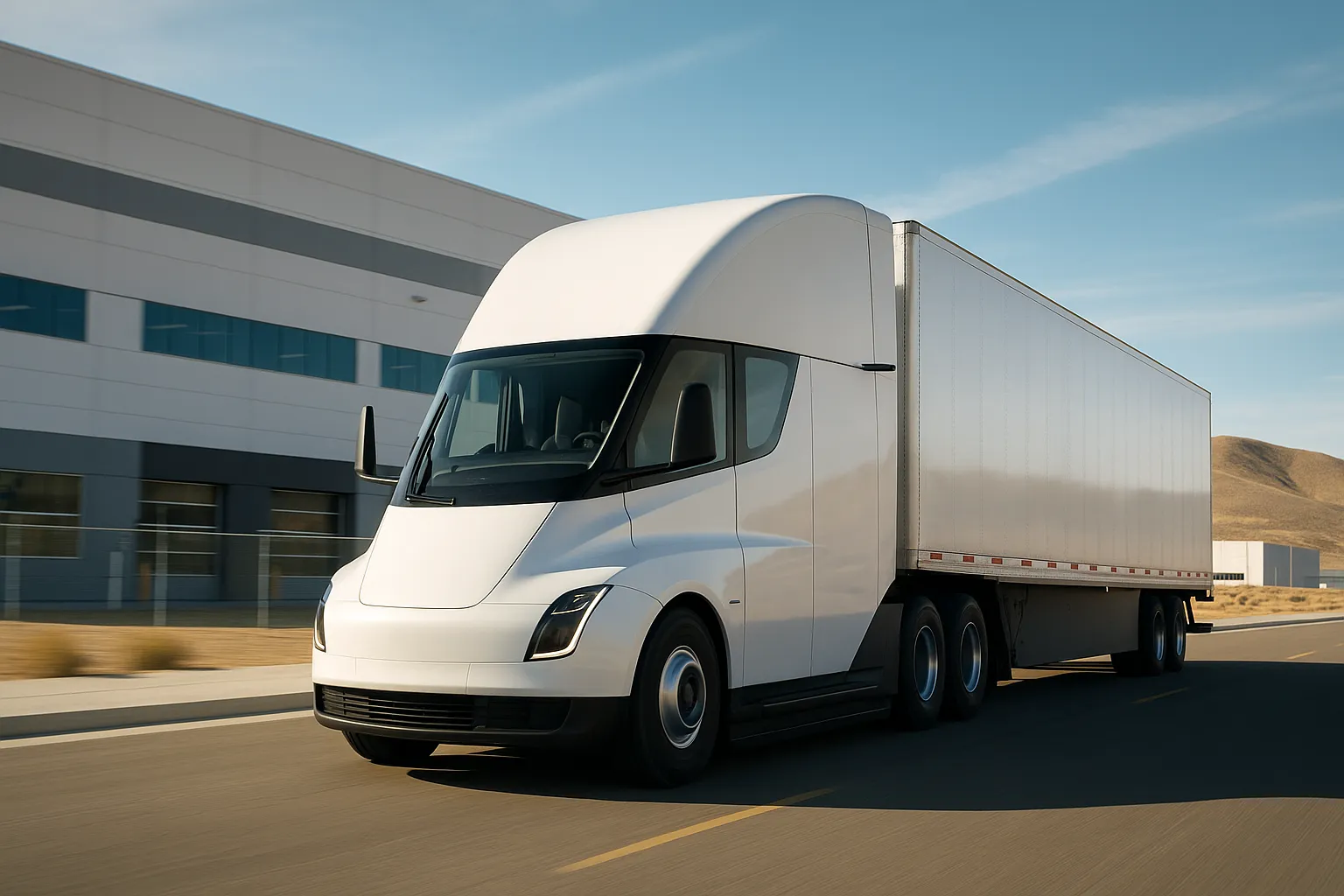
Tesla has opened its first factory in Nevada dedicated exclusively to the Semi. This brings the battery-electric tractor unit closer to industrial scale after an introduction that has been closely watched but limited in volume. The timing is striking: Only shortly beforehand, the average diesel price in the USA reached a record level. For haulage companies, retail chains and logistics companies, the question of alternative powertrains is therefore becoming not more theoretical, but more immediate.
The new site is more than an additional production hall for Tesla. Since its presentation, the Semi has been an unusual project within the company: not a passenger car, not a lifestyle product, but a working tool that has to be sold on operating costs, downtime, maintenance, payload and charging windows. In this world, acceleration figures or a minimalist cockpit alone do not count, but predictable availability over many years.
From showcase project to fleet product
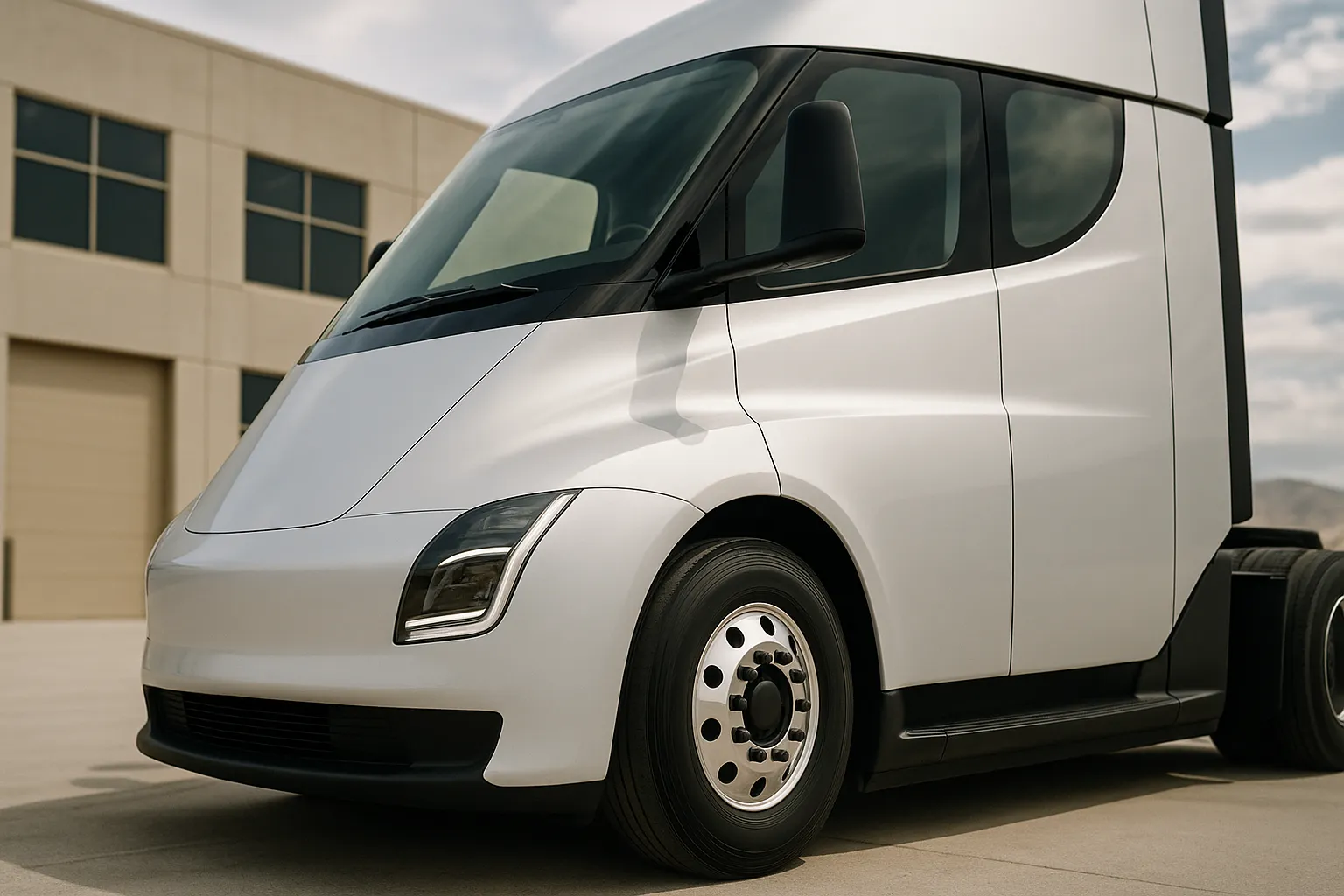
Tesla had already presented the Semi in 2017 and later delivered the first vehicles to commercial customers. So far, however, the program has remained significantly smaller than Tesla's passenger car business with the Model 3, Model Y, Model S and Model X. A dedicated factory changes this starting point because it can be designed for repeatable processes, supply chains, quality assurance and higher unit numbers.
That does not automatically mean that the Semi will become a mass-market product overnight. Information on production capacity, specific delivery times, equipment variants or nationwide availability remains decisive for fleet customers. Especially in the heavy commercial vehicle sector, ramp-ups are often more complex than with passenger cars. Batteries must be available in large quantities, axles, brakes, tires and cooling systems are subjected to heavier loads, and every vehicle must integrate seamlessly into logistics schedules.
Nevertheless, the opening of the plant is an important step. A dedicated site signals that Tesla sees the Semi not merely as a technology demonstration, but as a business model of its own in the commercial vehicle market.
Why high diesel prices sharpen the focus on electric trucks
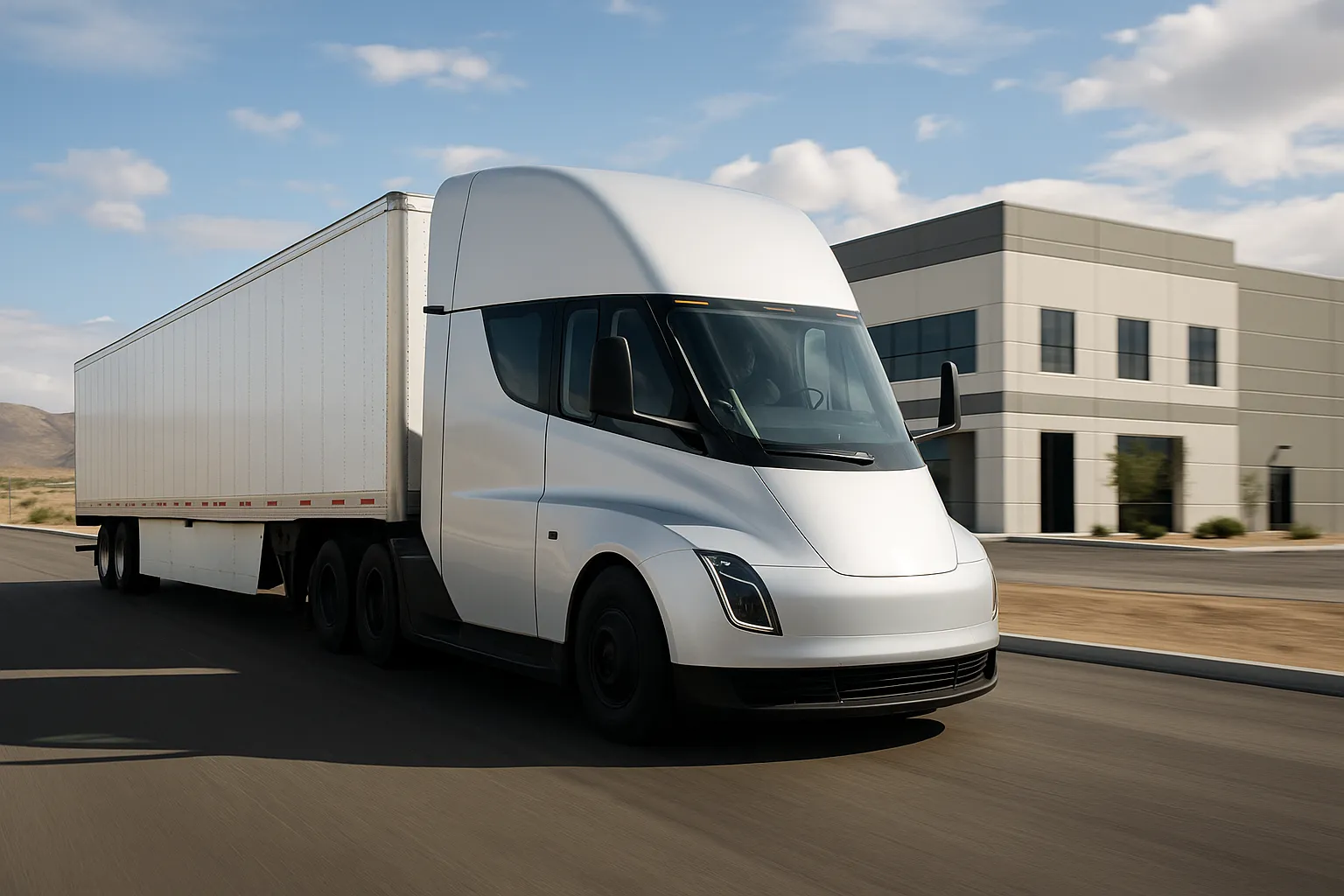
The most important lever for many fleets is not the purchase price, but the total cost calculation. Diesel is one of the largest ongoing cost blocks for heavy trucks. When the fuel price rises, the starting position for electric alternatives improves on paper – provided that electricity prices, charging losses, infrastructure costs and vehicle utilization suit the route.
An electric truck can make particular sense where vehicles regularly return to a depot, drive fixed routes and have predictable standing times. This applies, for example, to regional transport, factory logistics, retail deliveries or shuttle routes between distribution centers. There, charging points can be installed in a targeted way, energy costs can be calculated more accurately, and the vehicles can be charged overnight or during loading and unloading breaks.
In long-distance transport, the calculation is more difficult. Here, range, charging power, availability of public fast-charging points for trucks, rest periods, payload and weather conditions play a greater role. An electric tractor unit must not only be able to drive far; it must also remain economical when it is fully loaded, in cold weather, with headwinds or over mountainous routes.
Charging infrastructure becomes the bottleneck
With its own Semi plant, Tesla's responsibility grows beyond the vehicle itself. A heavy electric truck needs considerably more energy than a passenger car. For fleets, it is not enough to put a few wallboxes on the wall. High-performance depot chargers, grid connections, load management, parking areas, billing systems and maintenance concepts are needed.
This is a new kind of infrastructure project. A logistics center with several electric tractor units can generate electricity demand on a scale that makes early coordination with energy suppliers necessary. In some regions, grid connections can take months or years. For operators, the success of an electric truck therefore depends not only on the vehicle data sheet, but on whether energy is available where the truck is standing anyway.
Tesla brings experience from the passenger car charging network, but heavy commercial vehicles have different requirements. Larger batteries, tightly scheduled routes and high daily mileages require robust hardware and clear service processes. If Tesla delivers the Semi in larger numbers, charging and workshop coverage will become just as important a sales argument as range and efficiency.
The competition is not sleeping
The market for electric heavy trucks is now significantly broader than when the Semi was presented. Established commercial vehicle manufacturers offer battery-electric models for regional use, and several providers are working on solutions for longer distances. Traditional manufacturers have advantages here in dealer networks, fleet relationships, spare parts supply and industry-specific support.
Tesla, in turn, can score with vertical integration, software expertise and battery experience. The company has shown that it can quickly shape new vehicle segments. However, the commercial vehicle market is more conservative than the passenger car market. Fleets do not buy because of brand image, but because of availability, financing, service, residual values and operating data.
For Tesla, it will therefore be crucial to provide transparent performance figures in everyday use. These include energy consumption per mile or kilometer, real-world ranges under load, battery degradation, repair times and the ability to support vehicles over long life cycles.
What does this mean for car buyers and enthusiasts?
At first glance, a new Semi plant primarily affects logistics companies. Indirectly, however, it can also become relevant for private car buyers. First, the electrification of heavy commercial vehicles influences the entire battery and charging industry. Advances in high-performance charging technology, cooling, power electronics and energy management can also shape passenger car technology in the long term.
Second, the everyday lives of many consumers depend on goods transport. If electric trucks become economical on certain routes, they can make supply chains lower in emissions and potentially less dependent on diesel price fluctuations. That does not guarantee lower consumer prices, but it reduces a risk in the cost structure of transport.
Third, the commercial vehicle sector has great importance for local emissions. Especially near ports, warehouses and distribution centers, electric trucks can reduce exhaust gases and noise. For residents of such corridors, that is a direct benefit, provided the vehicles are actually used in significant numbers.
Still many open questions
The opening of the plant is a milestone, but not proof of a completed market breakthrough. What matters now are the production ramp-up, delivery capability, pricing, charging expansion and the experiences of the first larger customer fleets. The availability of battery cells and raw materials also remains a factor, because heavy trucks require large battery packs and therefore indirectly compete with passenger cars, stationary storage systems and other commercial vehicles for cell capacity.
For the industry, the step is nevertheless significant. Tesla is bringing the Semi into a phase in which high diesel prices, stricter emissions regulations and growing experience with electric fleets coincide. If the new plant produces reliably and the infrastructure grows with it, the Semi could play a larger role in the commercial vehicle market than before. If not, the electric truck will for the time being remain largely limited to suitable niche routes.
For buyers, operators and observers, the sober assessment is: The factory makes the Tesla Semi more serious, but it does not replace the practical test. In the truck business, in the end it is not the most spectacular promise that wins, but the vehicle that predictably earns money every day.