Nissan Z Kaze: Targa Roof and ’90s Tuning for the Modern Z Generation
The Nissan Z Kaze is a design study with a T-top roof, carbon add-on parts, and clear references to the 300ZX, Nismo, and Japanese tuning culture of the 1990s.
Nissan Digs Deep into Z History
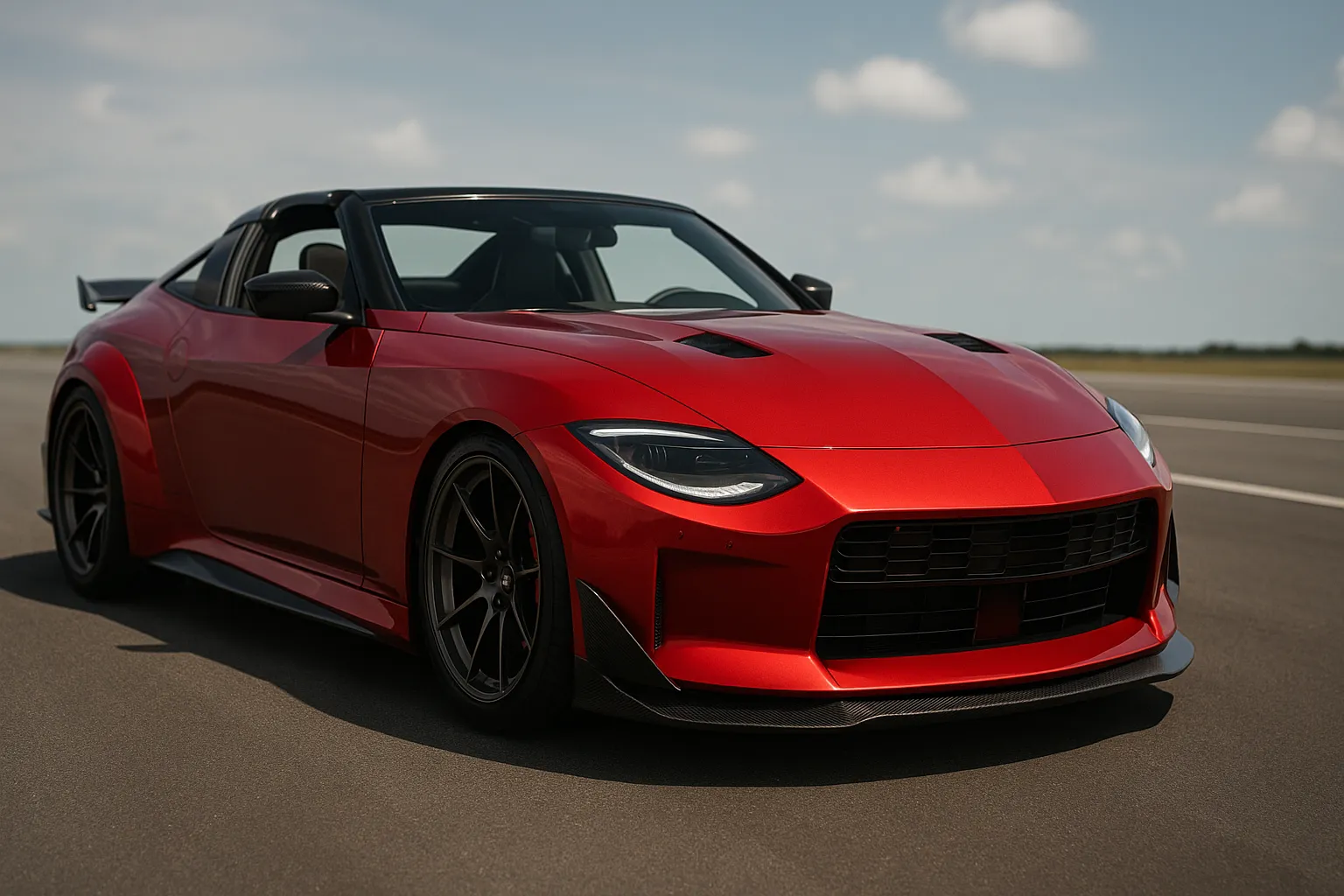
With the Z Kaze, Nissan has presented a concept vehicle that is less to be understood as a preview of an imminent production model and more as concentrated brand stewardship for one of Japan’s most important sports car lines. The study is based on the current Nissan Z and combines its retro design with details that clearly point to the 1990s, the tuning culture of that era, and the 300ZX.
The Z Kaze was unveiled as part of a gathering of the Z community in Phoenix, Arizona. That fits the message: This car is aimed first not at anonymous motor show visitors, but at people who know the model history, appreciate modified Z models, and can relate to names such as Fairlady Z, 280Z, 300ZX, 350Z, or Nismo.
The name is also part of the staging. “Kaze” means “wind” in Japanese and thus builds a bridge to the most striking body feature: a T-top roof. This roof form is particularly reminiscent of the Z32 300ZX, which launched in the late 1980s and became one of the defining Japanese performance coupés of the 1990s.
T-Top Roof as the Strongest Historical Reference
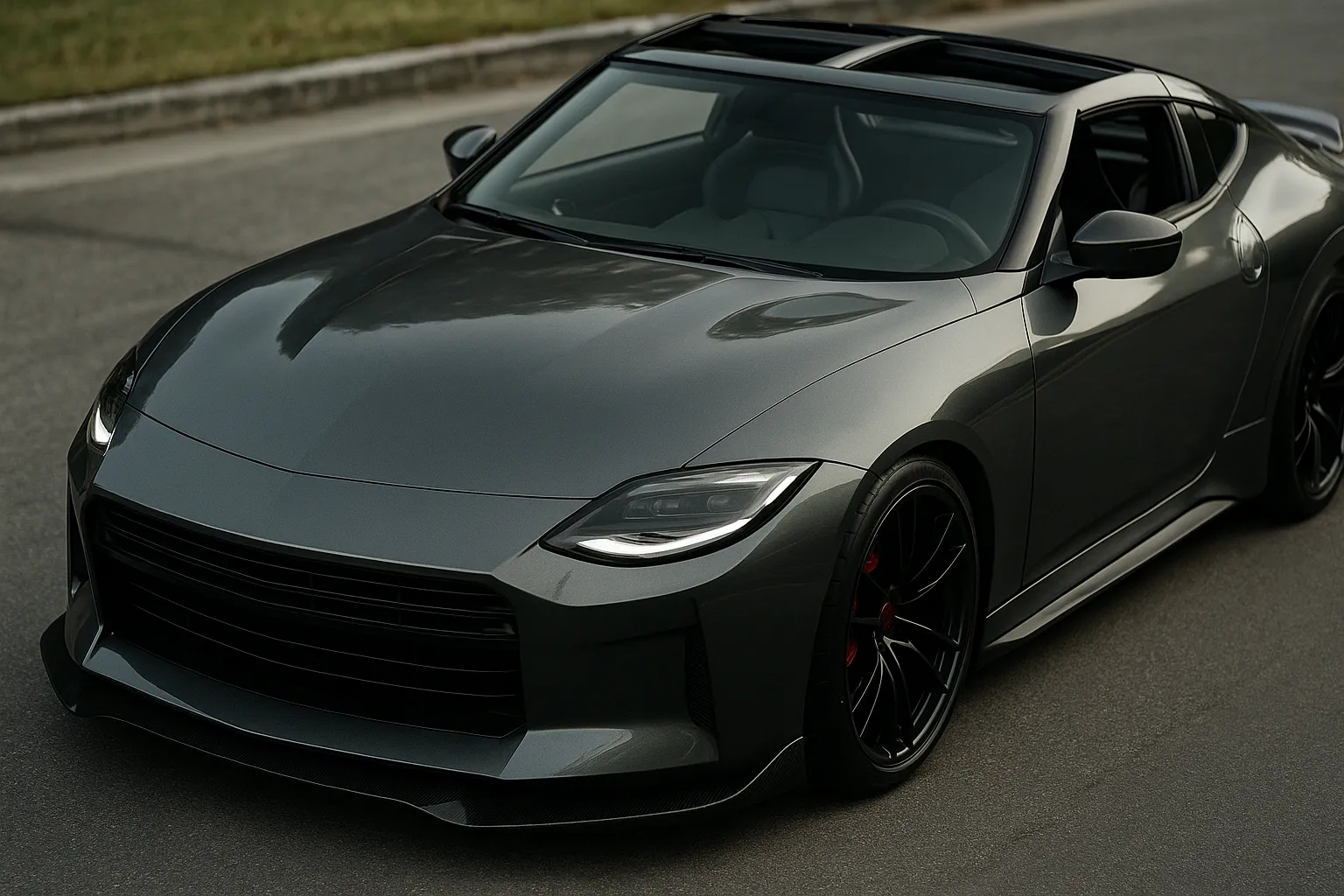
On the current Nissan Z, the production car uses a fixed coupé body. The Z Kaze deliberately breaks with this line. The T-top roof consists of two removable roof halves with a central bar and visually creates exactly that mix of coupé and open sports car that characterized many older Z models.
For buyers, what is especially interesting is what Nissan is testing with it: Not only performance figures or electrification count for the perception of a sports car, but also forms, memories, and usage experiences. A T-top roof is more complex to engineer than a fixed roof, can affect weight, rigidity, and sealing, and has therefore become rare today. Precisely for that reason, on the study it does not seem like an arbitrary show car detail, but like a deliberate reach into the company’s own past.
This is not connected with approval for series production. Nissan has announced no production, no price, and no market launch for the Z Kaze. However, the concept shows which elements the brand considers emotionally strong enough to make visible again.
Carbon, Wide Fenders, and ’90s Tuning
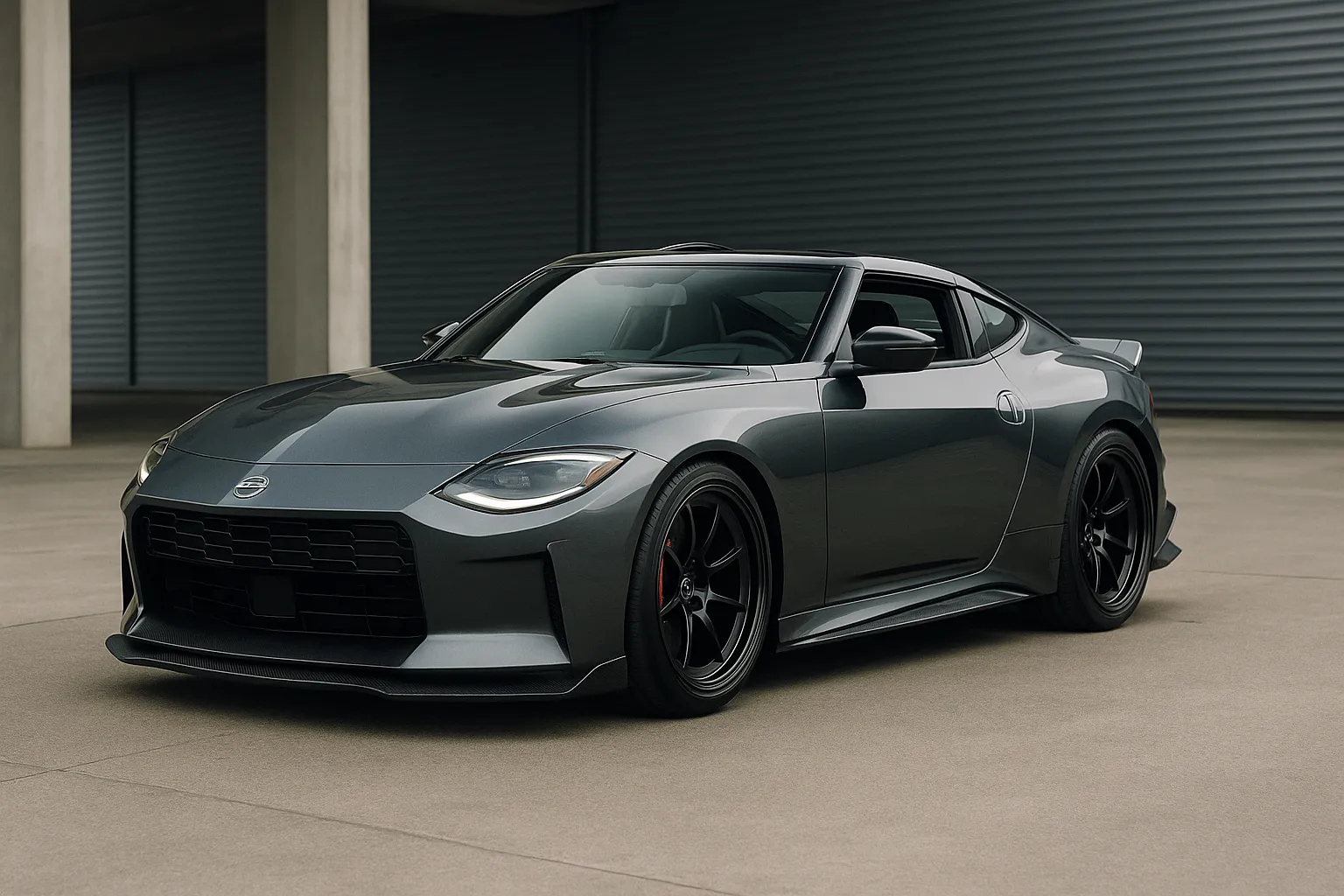
In addition to the roof, the Z Kaze wears a series of add-on parts that recall the style of modified Japanese sports cars from the 1990s. These include carbon air vents in the hood, widened wheel arches, a front splitter, side skirts, a revised rear bumper, and a larger rear spoiler. The parts do not look like a radical widebody conversion, but rather like a factory-interpreted version of what has developed in the tuning scene over decades.
The 1990s in particular are important for Nissan. During this period, models such as the 300ZX, the Skyline GT-R, and numerous Nismo parts became fixed points of Japanese performance culture. Video games, the import scene, track days, and later film series made these cars known worldwide. The Z Kaze uses this cultural charge without having to develop a completely new car for it.
Technical changes to the drivetrain are not the focus of the study. For the current Nissan Z, depending on the market, a 3.0-liter V6 with two turbochargers forms the basis; the production model is offered, among other things, with a manual transmission. With the Z Kaze, however, the focus is primarily on design, roof concept, and brand identity. Anyone expecting concrete power increases, chassis data, or production plans will so far find no reliable information.
Seven Generations of Z as Background
Nissan places the Z Kaze in the context of the entire Z history. This began in 1969 with the S30 Fairlady Z or Datsun 240Z, which offered a comparatively affordable, attractive, and everyday-useable sports coupé. It was followed, among others, by the 260Z, 280Z, 300ZX, 350Z, 370Z, and the current Z of the RZ34 series.
The strength of the Z line never lay in maximum power alone. What was decisive was the combination of a long hood, compact rear, rear-wheel drive, six-cylinder character, and a price level below many European sports cars. Exactly this formula made the Z attractive to enthusiasts and tuners. The Z Kaze is a reminder that a sports car is not just a data sheet, but also a platform for individualization.
For owners of older Z models, the study is likely to be a signal that Nissan continues to take notice of its own fan community. For potential buyers of a new Z, it is an indication of which design and accessory ideas could be conceivable in the future—even if this does not automatically result in a special model.
Why the Study Is Relevant to the Market
The timing is noteworthy. Sports cars are under pressure: stricter emissions regulations, rising development costs, falling unit numbers, and the boom in SUVs make standalone coupés more difficult economically. At the same time, cars like the Z Kaze show that emotional models have a brand effect for manufacturers that goes far beyond their sales figures.
For Nissan, this is especially important. Globally, the brand has to connect electric cars, affordable models, SUV demand, and performance tradition. A concept like the Z Kaze does not immediately sell more vehicles, but it strengthens the narrative that Nissan is more than just volume models. It recalls a time when Japanese sports cars were technically ambitious, comparatively attainable, and strongly rooted in the enthusiast scene.
The study is also relevant for the accessories and tuning industry. When a manufacturer itself stages classic tuning elements such as splitters, side skirts, fender flares, and carbon details, the boundary between aftermarket and factory design moves closer together. This can influence later genuine-accessory programs, limited equipment packages, or Nismo components.
Europe Remains an Open Point
For German and European buyers, the practical question remains: Will any of this come to us? The current Nissan Z is not offered across the board in Europe, and there is also no announcement for a production version or European distribution of the Z Kaze. In the United Kingdom, there have recently been new signals that Nissan is again giving the Z stronger consideration there, but reliable details on timing, volumes, or specification are lacking.
For the time being, the Z Kaze therefore remains a show car with strategic significance. It shows which historical motifs Nissan is actively maintaining: T-top, 300ZX appearance, Nismo proximity, and ’90s tuning. For enthusiasts, that is more than nostalgia. It is a test of whether the brand is prepared to keep its performance past visible even in an electrified and regulated future.
A Concept with a Clear Message
The Nissan Z Kaze is not a new production model and not a technical revolution. Its significance lies in the clean translation of old Z motifs into the design language of today’s model. The T-top roof gives the study character, the carbon add-on parts provide the link to tuning culture, and the presentation in front of the Z community shows whom Nissan wants to reach.
For buyers, little changes in the short term. For fans of the brand, however, the Z Kaze is an important sign of life: Nissan knows that the Z is not just a car, but a piece of sports car culture. Whether this later results in accessories, a special model, or remains just a well-made concept is open. The direction, however, is clear: For Nissan, the 1990s are not only the past, but still a useful toolkit for enthusiasm.