Fiat Grande Panda Hybrid in everyday use: Plenty of charm, but early quality questions
The Fiat Grande Panda Hybrid La Prima shows in its first long-term impression why small, simple cars remain in demand. But after around 1,960 kilometers, weaknesses in material feel and robustness also become apparent.
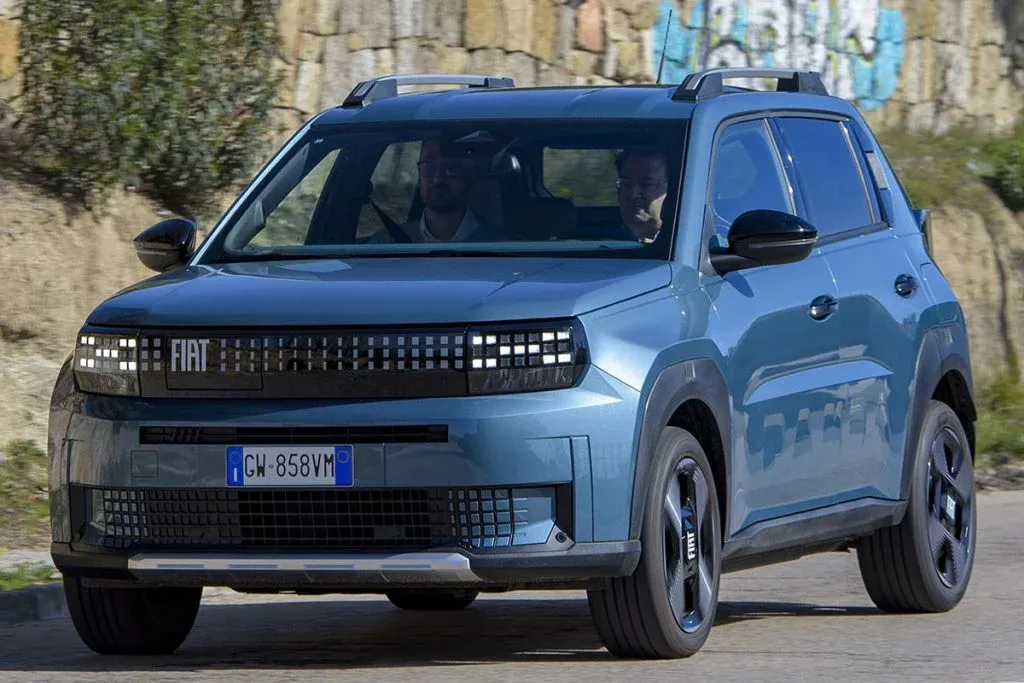
A likeable small car with a demanding heritage
The Fiat Grande Panda Hybrid La Prima starts its everyday test with a clear task: It is meant to translate the simple, robust and affordable character of earlier Panda generations into a more modern small-car world. After the first roughly 1,218 miles, or about 1,960 kilometers, it presents itself as a car with plenty of charm, good usability and decent everyday practicality. At the same time, questions about build quality and material choice are already emerging.
That is precisely why the Grande Panda is interesting. Small cars are becoming rarer in Europe because safety, emissions and technology requirements are making development more expensive. Many manufacturers are withdrawing from affordable segments or pushing the prices of their entry-level models upward. With the Grande Panda, Fiat is trying to offer a car that does not feel overcomplicated, but still has the technology expected today on board.
What the Grande Panda does well
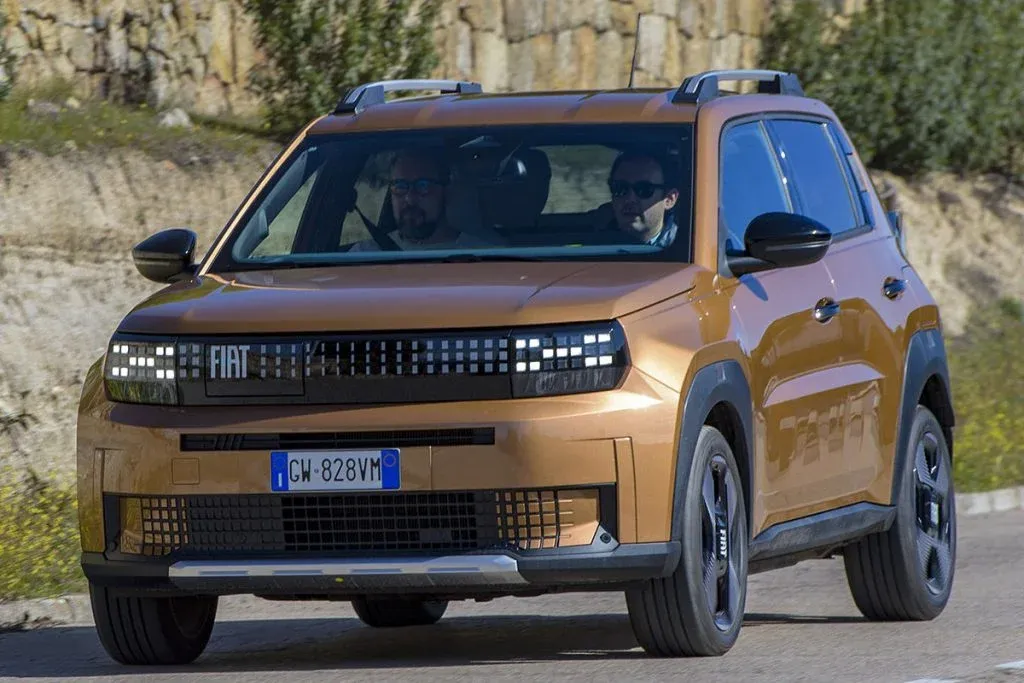
The strongest impression does not come from performance or luxury, but from accessibility. The Grande Panda Hybrid is easy to drive, easy to see out of and apparently tailored precisely to short to medium everyday journeys. That is important, because many buyers of a small car are not looking for a status symbol, but a car for commuting, shopping, city traffic and occasional trips.
The controls are described as uncomplicated. That is a real plus in a vehicle class in which touchscreen menus and hidden functions can quickly become annoying. When a car works intuitively in everyday use, that often counts for more than a long equipment list. Especially for first-time buyers, older drivers or households looking for a second car, simple operation can be a decisive argument.
The sense of space also stands out positively. For a supermini, the Grande Panda apparently offers more utility than its compact exterior dimensions would suggest. That fits the Panda tradition: small footprint, as much interior space as possible, as little fuss as possible. Anyone who regularly carries passengers or needs a handy car in city traffic benefits from this approach.
Fuel consumption: solid, but not a miracle figure

After the first test phase, an average of 41.2 mpg is on the table. Converted, that corresponds roughly to 6.9 liters per 100 kilometers, assuming the British imperial-gallon figure is used. For a hybridized small car, that is a usable, but not exceptional, figure.
The context is important: Long-term fuel consumption depends heavily on usage profile, weather, driving style, load and traffic conditions. City traffic can help a hybrid, while longer motorway stretches help less. The figure so far therefore does not provide a final benchmark, but it does show that the Grande Panda Hybrid does not automatically become a fuel-saving miracle. Buyers should calculate realistically and not rely only on the word “Hybrid.”
For many interested buyers, however, record fuel consumption matters less than the combination of low running costs, simple handling and a manageable purchase price. In this respect, the Grande Panda basically remains on a promising path, provided its reliability is confirmed.
The downside: material and quality questions
The early everyday impression is not only positive. There are noticeable indications of visible cost discipline in the interior as well as surfaces that apparently react sensitively to scratches. Added to this are doubts about general build quality. In a small car, simple materials are not automatically a problem; buyers in this class do not expect a premium-class feel. What matters, however, is whether the parts used seem robust and can withstand tough everyday use over the years.
This is exactly where the Grande Panda still needs to build trust. A Panda should not only look friendly, but also be able to cope with scratches, bags, child seats, tight parking garages and bad roads. If surfaces show marks early or components feel cheap, that affects not only the subjective impression of quality. It can also concern resale value, satisfaction and long-term durability.
For buyers, this means: On a test drive, attention should not be paid only to design and equipment. Doors, seats, storage compartments, trim panels, control buttons and luggage-compartment details deserve a close look. Anyone who wants to keep a car for a long time should check whether the materials suit their own usage profile.
La Prima: equipment with character, but not free of compromises
The tested La Prima version positions the Grande Panda more toward the upper end of the model range. That makes it particularly interesting that criticism of material feel and scratch sensitivity still appears. A better-equipped version can offer infotainment, comfort details and design accents, but it does not automatically eliminate all signs of cost pressure.
This is a typical issue for modern small cars. Manufacturers have to reconcile attractive prices, safety equipment, connectivity and emissions requirements. Savings are then often made on plastics, insulation or details that are less noticeable in the showroom than a large screen. For the industry, the Grande Panda thus highlights a larger challenge: An affordable small car today has to be more modern than before, but must not become so expensive that it loses its target group.
Why this car is important for buyers
The Grande Panda Hybrid represents a type of vehicle that many people still need: affordable, practical small cars with manageable dimensions. Not everyone can or wants to drive a large SUV. Not everyone has private charging access for an electric car. And not everyone wants a car that demands more attention in everyday life than necessary.
If Fiat gets the mix of simple concept, distinctive design and modern basic technology right, the Grande Panda could become an attractive alternative to more expensive small cars and small crossovers. It appeals to drivers who are looking for a car with personality, but do not need a complicated technology show.
The first kilometers also show, however, what matters: Sympathy alone is not enough. A Panda in particular has to prove itself through robustness. The design may be playful, the controls simple, the interior practical. But the quality has to withstand everyday life.
Preliminary verdict
The Fiat Grande Panda Hybrid La Prima gets a lot right in early everyday use. It feels handy, friendly, sufficiently spacious and pleasantly uncomplicated. Its modern technology does not seem to get in the way, but instead usefully complements its utility. That strikes a chord at a time when many small cars are either disappearing or becoming more expensive and more complex.
The open points are not minor, however. Doubts about build quality, scratch-sensitive surfaces and visible thriftiness in materials should be watched closely over the coming kilometers. For interested buyers, the Grande Panda Hybrid is therefore a car that one should not only like because of its design, but should thoroughly touch, try out and compare before buying.
The first impression is: a very likeable small car with real potential, but also with quality questions that will determine its long-term recommendation.